Design your own advanced topic seminar experience with four or five 4-hour sessions taught by our highly rated faculty in real time!
2026 MEGA Schedule
| Date & Time (CENTRAL TIME) | Faculty | Topic |
| Tuesday, September 1 1p-5p | Richard Hart | Agents Beware: E&O, Certificates, and Fraud Errors and omissions can lead to claims against insurance professionals. Certificates and binders often cause frustration and confusion, contributing to E&O claims. This four-hour session will cover three main topics affecting daily operations. Participants will analyze the causes of E&O claims and learn strategies for prevention. Real-life examples will be used to identify potential exposures and discuss appropriate responses if claim is made. The session will also address challenges arising from certificate of Insurance and binders, learn their importance, purpose and effective use to protect clients from unexpected and unintended exposures. Common errors in issuing Certificates and binders will be discussed, along with strategies to avoid them. Finally, the impact of insurance fraud on the U.S. economy and consumers will be examined, including specific cases involving insurance professionals and their consequences. |
| Thursday, September 10 10a-12p/2p-4p | Chris Christian | Construction Risk – What’s not in the CGL The potential for professional liability claims may seem apparent when considering services such as engineering or construction management. In this 4-hour session, insurance professionals will explore exposures beyond the typical commercial general liability, workers compensation, and commercial auto exposures in the construction industry. They will examine the types of coverages for ancillary exposures, such as: contractors pollution, contingent pollution, contractors professional liability, rectification costs coverage, protective indemnity coverage, network security/privacy liability, technology, faulty workmanship, etc. They will identify emerging risks that could have a significant impact on the construction industry, such as: automated/autonomous construction machinery, robotics, drones, and artificial intelligence. They will discuss the exposures, coverage issues, and gaps with traditional insurance policies and explore possible solutions to these emerging and unique risks. |
| Monday, September 14 1p-5p | Casey Roberts | NEW! Fields, Fences, and Forms: A Guide to Farm Insurance Farming has transformed significantly due to technology, regulatory changes, and rising food demands. This course provides definition of farm and introduces insuring farming risks and their impact on insurance decisions including eligibility for homeowners versus farm policies. Participants will study key ISO Farm Coverage Forms: including FP 00 12 (Farm Property – Farm Dwellings, Appurtenant Structures and Household Personal Property Form), FP 00 13 (Farm Personal Property), FP 00 14 (Barns, Outbuildings and Other Structures), FP 10 60 (Causes of Loss – Farm Property), FL 00 20 (Farm Liability Coverage Form). These forms help professionals evaluate covered and non-covered property, apply loss valuation methods, and navigate coinsurance and special limits. The session teaches how to apply endorsements for risks such as agritainment, pollution, and mobile equipment, enabling professionals to craft tailored insurance solutions for modern farming needs. |
| Friday, September 18 10a-12p/2p-4p | Lance Ewing | Emerging Risks in Changing Times Preparing for new and emerging risks can be a full-time job for the insurance professional. Technology, nature, terrorism, artificial intelligence, human and economic developments are rapidly changing the risk landscape and the insurance environment. In this session, you will identify those emerging risks that could have a significant impact on your client’s business, their agency or organization, or even their career. Using an interactive and breakout approach, you will learn how to prepare for what “will” happen rather than “what” happened. |
| Tuesday, September 22 1p-5p | Ross Pearce | Challenges Correctly Covering Condos & Cars Participants will analyze significant issues encountered when writing residential condominium coverage. They will examine coverages and exclusions provided in the latest edition of the Homeowners 6 – Unit-Owners Form. They will discuss key definitions and examine the differences between the HO 00 06 and HO 00 03 (Homeowners 3 – Special Form). They will discuss ways to close coverage gaps using HO endorsements and examine possible solutions to better serve their clients. They will discuss the challenges with providing insurance coverage for Transportation Network Companies (TNCs), electric bikes and scooters, and autonomous driving vehicles. They will review coverage issues, as to what is or is not covered by the PAP and explore potential solutions to fill the gaps to better serve their insureds. |
| Wednesday, September 30 1p-5p | Patrick Hardy | Creating an Elite Crisis Team in Your Agency in 3 Steps We live in an age of disasters. Disasters are not inevitable. In this course, Learn the list of actions in crisis management plan that will be taken before, during, and after a catastrophic event that preserves lives, safeguards property, and reduces the loss of resources essential to the organization’s recovery. Insurance and risk management professionals will identify the 3 essential elements in a comprehensive emergency management program – crisis management, business continuity, and disaster recovery. You will learn the types of hazards, perils, and risks your organization could face, how to respond, who will take action, what the plan should cover, what tools are needed to implement the plan, what training is needed to prepare and how to review and assess the effect. |
| Date & Time (CENTRAL TIME) | Faculty | Topic |
| Friday, October 2 1p-5p | Jerry Kennedy | Ethics You Can Use (Only Approved for 3-Hrs ETH in MD) Participants will examine the professional, legal, and ethical responsibilities in dealing with the day-to-day realities of the complex, ethical issues of the insurance industry. They will compare and be able to explain the difference between legal and ethical responsibilities and discuss the foundations of ethical behavior. They will review court cases dealing with the agent as a “professional” along with the agent’s duty to the customer, insurer, and peers. Using a series of case scenarios, they will be able to identify what constitutes an ethical dilemma and apply the ethical principles discussed in this session to determine the right course of action. |
| Wednesday, October 7 1p-5p | Cathy Trischan | NEW! And The Court Said…(Commercial Lines Coverage Issues) This course deepens understanding of coverage interpretation through real-world litigation examples. Participants will examine how court interpret language in Commercial Property, Business Auto, CGL, and Builders Risk policies. Topics include definitions of fixtures and permanently installed machinery, protective safeguards, and “complete working order” under commercial property policies. Business Auto discussions focus on Symbols 8 and 9. CGL discussions cover “property damage,” electronic data, “care, custody, or control,” in damage exclusions and impact of “separation of insureds” clauses on employer liability exclusions. Court rulings on assault and battery, human trafficking, and firearms exclusions are explored. Builders Risk coverage is explored through defect exclusions, LEG 3 language, and how court differentiates between defective work and resulting damage. In conclusion, participants gain skills to anticipate disputes and recognize how policy language is interpreted by court. |
| Tuesday, October 13 10a-12p/2p-4p | Chris Christian | Cyber Crime This class examines the risk management strategies necessary to minimize cyber attacks. Agents will learn about insurance coverage solutions in order to better understand the concepts and exposures related to the cyber crime industry. |
| Thursday, October 15 1p-5p | Cathy Trischan | Commercial Liability Endorsements To Watch Out For Agents will examine some of the endorsements that can severely restrict coverage under the Commercial General Liability (CGL) Policy. They will review several ISO endorsements and see examples of non-standard endorsements often used by insurers. In each case, they will discuss the effect that the endorsement has on the coverage that would otherwise have been afforded by the CGL Policy. |
| Wednesday, October 21 1p-5p | Casey Roberts | Personal Lines, Issues We Need To Understand In this session, participants will explore significant concerns found within the ISO Personal Automobile and Homeowners policies – such as ownership, liability, and loss assessment coverage – and develop ways to explain them to their clients. |
| Monday, October 26 1p-5p | Allen Messer | Named Insureds, Automatic Insureds & Non-Automatic Insureds Participants will examine the status of Named Insureds, Automatic Insureds, and Non-Automatic Insureds in the Commercial General Liability and Business Auto Coverage Forms. They will learn the primary reasons for adding Additional Insureds, as well as the advantages and disadvantages. For each policy, a brief discussion of who is an insured is necessary to the understanding of why the additional insured endorsement may be needed and how it changes coverage. |
| Wednesday, October 28 10a-12p/2p-4p | Chappy Chapman | Personal Lines Claims Issues Using a question and answer format, agents will discuss how the Personal Auto and Homeowners Policies provide or exclude coverage. Participants will discuss how the PAP provides or excludes coverage for exposures, such as: students away from school, persons living together without the benefits of marriage, personal vehicles purchased through a company owned by the insured, motorized vehicles, rental cars, and vehicles used for livery and/or delivery. They will look at how the Homeowners Policy provides or excludes coverage for identity theft, business in the home, homes put in the name of a trust, and more. |
| Date & Time (CENTRAL TIME) | Faculty | Topic |
| Tuesday, November 3 10a-12p/2p-4p | Clarissa Preston | Work Comp Techniques, Trends, and Tools Insurance professionals will better understand the techniques, trends, and tools used in the workers compensation industry. They will examine how workers compensation insurance was developed and review the basic components of the current NCCI Workers Compensation policy. They will better understand underwriting – NCCI Classification Inspection Program and Experience Rating Modification Factor. They will discuss claims handling and dispute resolution. They will examine issues related to the use of independent contractors. They will discuss WC trends in legislative and legal trends, such as marijuana and its impact on the WC system. They will examine medical trends and workplace safety trends. They will discuss how natural disasters, such as COVID-19, impact the WC industry. They will discuss artificial intelligence and its impact on data collection and claims handling. They will learn about NCCI online tools that will help them better understand workers compensation. |
| Thursday, November 5 1p-5p | Sam Bennett | Transportation Exposures of the Agriculture Client This session will examine the transportation exposures faced by agricultural risks. Agents will review mobile equipment coverages found in farm liability forms; coverage for owned and non-owned vehicles under the Personal Auto Policy (PAP); and auto coverages available under the Business Auto Policy (BAP). |
| Friday, November 13 10a-12p/2p-4p | Dave Hershey | Managing the Nuts & Bolts of a Diverse Risk Management Program In this session, agents will examine how to structure an insurance and risk management program for a large, complex, organization. They will learn ways to transfer risk with self-insurance, insurance, large/low deductible, self-insured retention, contractual risk transfer, and more. They will discuss ways to provide coverage for workers compensation, auto liability, general liability, marine liability, pollution liability, property, cargo, and international exposures. |
| Monday, November 16 1p-5p | Steve Lyon | Understanding Occurrence and Claims-Made Triggers In this session, agents will review the occurrence and claims-made forms and examine the difference in coverage triggers. They will be able to explain the difference between the pure claims made and the more common claims-made and reported forms of coverage. Using real-life examples and court cases, they will identify coverage gaps and discuss ways to avoid them. They will have a better understanding of the Commercial General Liability Occurrence and Claims-Made coverage forms, including the advantages and disadvantages of each. |
| Wednesday, November 18 1p-5p | Ted Kinney | An Insurance Agent’s Standard of Care: What is Your Legal Duty to Your Insureds? An insurance agent owes a duty to use reasonable diligence and care in conducting business with insureds and insurers. In this session, participants will better understand the types of agents and the types of agency authority. They will discuss reasons for lawsuits by companies, by insureds, and by third parties. Using case studies, they will identify common mistakes agents can make that could lead to E&O claims and then recommend solutions to avoid them. |
| Date & Time (CENTRAL TIME) | Faculty | Topic |
| Wednesday, December 2 1p-5p | John Dismukes | Are These Personal Lines Losses Covered? In this session, participants will use real claim examples to discuss problems and possible solutions to Homeowners Policy exclusions that limit or remove coverage for dwellings rented to others, personal liability, co-habitation, motorized vehicles, home-sharing, and ownerships. Participants will also discuss ISO Personal Auto Policy exclusions for furnished vehicles, non-owned autos, and various uses. |
| Friday, December 4 10a-12p/2p-4p | Crystal Uebelher | You’ve Been Served – What To Expect When You Are Served Using a hypothetical insurance case study, participants will gain an understanding of the stages of the investigation and litigation including the importance of the insured’s participation in the process. Key policy terms that provide the insurance carrier with tools to successfully investigate and defend lawsuits against insureds will be examined and discussed. |
| Monday, December 7 10a-12p/2p-4p | Paula Burns | Navigating Risk for Religious & Non-Profit Organizations There are risks to operating any non-profit organization, and those risks can differ in important ways from other businesses or organizations. In this session, insurance professionals will be given an overview of religious and non-profit organizations that includes their liabilities, unique exposures, and the impact of current issues to better understand the nature of the risk. They will discuss issues that make non-profits difficult to insure, as well as the challenges with obtaining and maintaining insurance. They will discuss the importance of risk management and steps in the risk management process – identification, transfer, and implementation. They will examine general risk exposures and the types of insurance available for non-profits, focusing on churches and schools – premises liability/general liability, sexual misconduct, building usage, professional liability, educators’ liability, employment practices liability, media liability, cyber liability, and special events. |
| Thursday, December 10 1p-5p | Ross Pearce | Gaps in Homeowner’s Policies Due to Changes in Family Dynamics Participants will discuss new and current homeowner’s issues that insureds face today due to the changes in family dynamics. They will examine coverages and exclusions provided in the latest edition of the Homeowners Policy. Using real-life scenarios, they will learn how the Homeowners Policy provides or excludes coverage for exposures, such as: residence premises, tiny houses, persons living together, other structures on premises, homes rented to others, aircraft (drones), electric bikes and scooters, ordinance or law, and personal liability claims. They will discuss the exposures, whether the Homeowners Policy provides adequate coverage for the exposures, ways to close the coverage gaps using endorsements, and other possible solutions to better serve their clients. |

Select Your Sessions After Registration
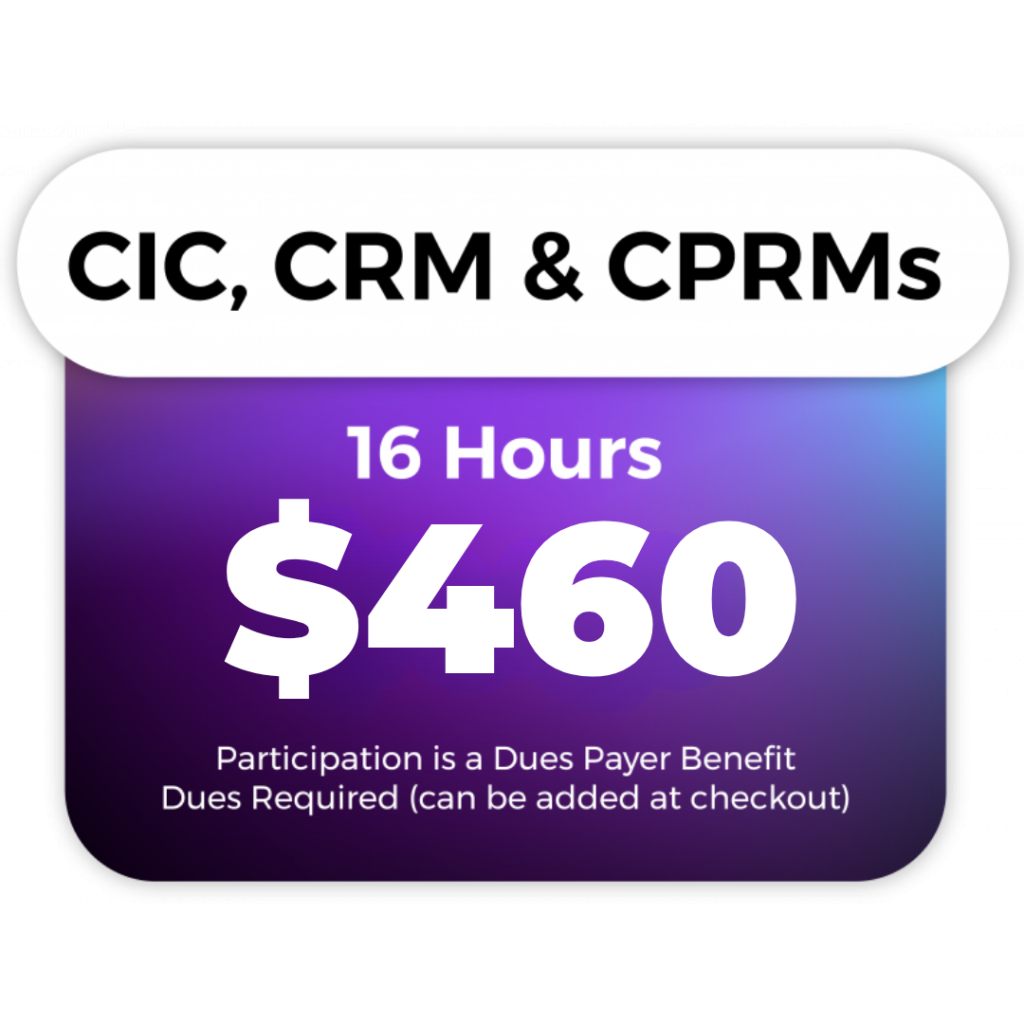
CIC, CRM & CPRMs: Select 4 - 5 sessions.
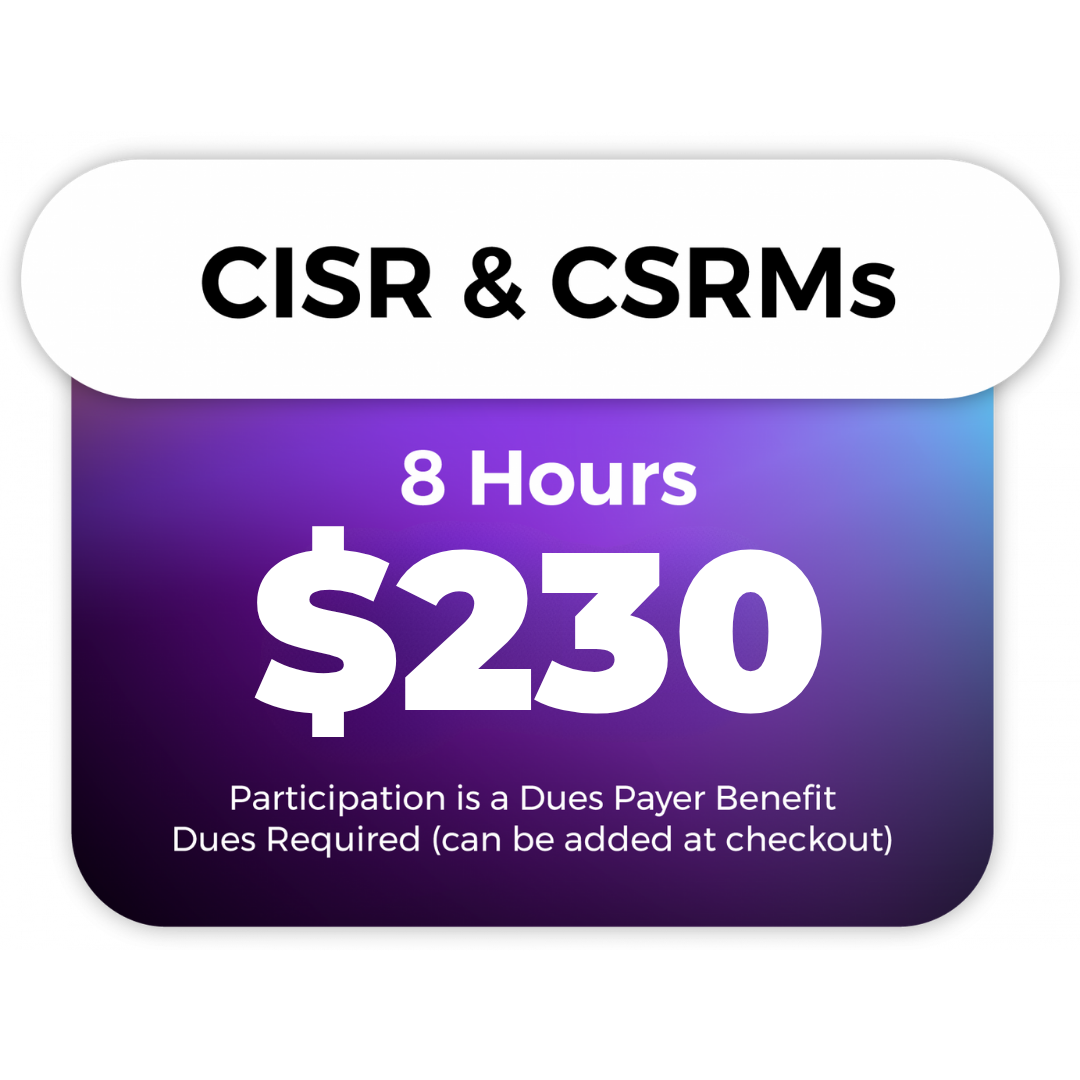
CISR & CSRMs: Select 2 - 3 sessions.

Reserve Your Seat

Select MEGA Sessions

Attend from Anywhere

Attend Live Online Sessions
The Online Ruble MEGA Seminar is approved for CE and designation update credit, includes practical content you can use immediately, and is taught by our highly rated faculty in real time.
- Practical content
- Taught live by nationally recognized industry practitioners
- Full attendance required for update or CE Credit
- No final exam required
“What I loved about the new online MEGA is the flexibility to take one’s 16 hour update over the entire year, with several offerings to choose from. While I only needed 4 of the online MEGA topics to fulfill my 16 hours, there are additional topics of interest that I am taking through the year end offering…one isn’t limited to just the 4 update topics.”
PREFER LEARNING AT YOUR OWN PACE?
Try the NEW ON-Demand James K. Ruble Online MEGA!
The NEW On-Demand Online MEGA Seminar satisfies your update requirement.
Log on any time, day or night, 24/7.