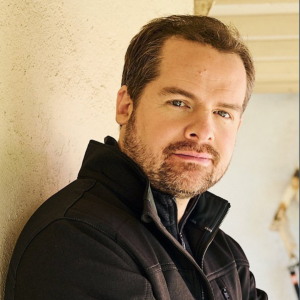
Patrick Hardy, CRM
helps individuals and organizations prevent disruptions from ever becoming a disaster. Drawing on his world-class expertise in disaster preparedness & response, he distills memorable lessons audiences can use to break the Crisis Creation Chain and transform every disruption into an opportunity for learning.
We’ve all seen it: the thick, dust-covered “Red Binder” sitting on the top shelf of a manager’s office, labeled In Case of Emergency. It’s a classic insurance agency relic. But here’s the cold, hard truth of disaster science—binders don’t save lives; people do.
My name is Patrick Hardy, and if you’ve followed my work, you know I’m not your average safety consultant. I’m the guy who spent 28 hours straight performing CPR to test the limits of human endurance. I’m the guy who built a LEGO structure and threw it into a 200mph wind tunnel just to prove that engineering beats luck every single time. I’m obsessed with how systems hold up under extreme pressure.
I’ve dedicated my life to being an elite crisis professional, but my approach isn’t built on fear or “doom-and-gloom.” In fact, I’m allergic to boring safety lectures. I believe that preparing for the worst should be one of the most engaging, high-energy, and empowering things you ever do for your business.
Why This is Personal
I didn’t learn about crisis management from a textbook. I learned it in the trenches, working with organizations large and small to navigate their darkest days. My obsession with “The System” comes from a simple realization: in a disaster, the plan is only as good as the person who believes they are authorized to execute it.
In the insurance world, you are the stewards of risk. You spend your days protecting your clients’ futures. But if your own agency can’t handle a sudden internal crisis, that professional credibility evaporates in an instant. When I teach, I don’t just read off slides; I bring the “Disaster Lab” into the classroom. I share wild stories of real-world saves and spectacular failures. I want you to see the “cheat codes” of survival—the physics of wind, the logistics of an evacuation, and why the most important tool you own isn’t a fire extinguisher—it’s your mindset.
The Myth of the Bystander
The one major pitfall that destroys almost every crisis program is the Bystander Effect. When an incident occurs—a fire, a security threat, or a flash flood—most employees freeze. They think, “If I do nothing, someone else will handle it.” To build an elite team, you have to kill that mindset. You have to replace it with the Language of Empowerment. In my upcoming course, we drill down into the most critical part of my 3-step system: Step 1 – Taking Command. Command isn’t a military rank; it’s a psychological reset. I teach employees to assume that if they don’t act, no one will. When you empower a CSR or an Underwriter to take leadership regardless of their typical office title, you stop them from becoming bystanders and transform them into active responders. This shift in thinking is more valuable than 500 pages of “how-to” text because it allows your team to adapt when the situation (inevitably) goes off-script.
The Tools of the Trade: Buy It, Try It, Don't Rely on It
Once the mindset is set, we look at the gear. But an elite team doesn’t just buy a “pre-packaged” emergency kit from a catalog. Those are built for everyone, which means they are built for no one.
In my videos, you’ll see me testing equipment to its absolute breaking point—whether it’s survival pods or high-tech sensors. I bring that same scrutiny to your agency. We follow a strict protocol: Buy it, Try it, Don’t Rely on it. We customize “Command Backpacks” for every office. I’ll show you why you need three specific types of flashlights, why an emergency cell phone is a lifeline, and why—despite the hype—you should never rely on AI or untested mobile apps during an active life-safety event. AI is great for generating content, but as I often tell my viewers, in a crisis, it’s a “no-no” until it has a few more generations to mature. You need gear that works when the power is out and the internet is down.
The "A-Ha" Moment: Bi-Directional Training
Finally, we test the system. This is where it gets really fun. With Millennials and Gen Z now making up the core of the workforce, “top-down” safety lectures are dead. They don’t want to be talked at; they want to be part of the solution.
We use Bi-Directional Training, where we ask the workforce to help identify the limitations of the plan. We then run everything through the “Crucible” of a Full-Scale Exercise (FSE). An elite team needs to feel the stress, touch the equipment, and move through the stairwells. We don’t just “talk” about a crisis; we simulate the friction, the noise, and the pressure until the response becomes muscle memory.
Join the Front Line
I’ve spent my career proving that smart systems beat expensive gear every time. This course is designed for agency owners, risk managers, and anyone ready to move beyond “doom-and-gloom” preparedness and into high-performance leadership. You don’t need a background in emergency services—you just need a willingness to recalibrate your thinking and a desire to turn your office into an elite team.
I look forward to seeing you in class, sharing some of my crazier challenges from the field, and helping you convert your workforce into a team that doesn’t just survive an incident, but commands it.
Evaluating a Comprehensive Crisis Management Program
Wednesday, March 18th
1pm-5pm
Patrick Hardy